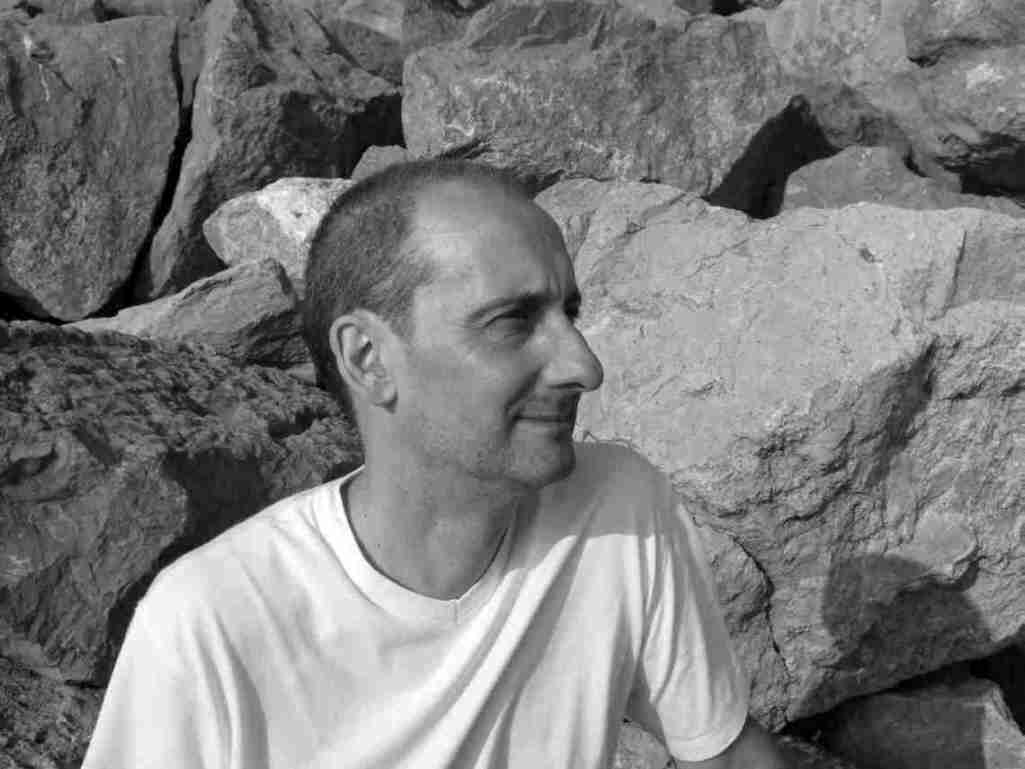
I have been re-reading Malc's Dark as the Grave wherein my Friend is Laid and I have been digging out images, video and music to illustrate references in the book.
A theme which runs through the Dark as the Grave wherein my Friend is Laid and La Mordida is Malc's contempt for American tourists who invaded Mexico after the WW2.
However, there is a certain irony in Malc's inferred criticism of US tourism in his work as he and Margerie behaved in many ways like the average tourist in their sight seeing.
There is an obvious tension in any writer visiting a country and using the visit as material for a novel. Malc was accused of adding too much "local colour" to Under The Volcano by one of Cape's readers before publication of the novel. It is interesting to note in the edition of La Mordida which has been published that Lowry's notes from a tourist guide to Mexico are included.
I have posted the above home movie from YouTube which gives a feel for US tourism in Mexico in the late 40's.
I am currently re-reading Lowry's Dark as the Grave wherein my Friend is Laid and came across Lowry's reference to the above song. Lowry's alter-ego Sigbjorn Wilderness lies in bed in Cuernavaca:
"It was still quite early, early enough, he thought, waking slightly more, for the sounds of the party, the posada, still to be going on next door, or over the barranca, wherever it was: the clarinet soared. "Smoke gets in you eyes," (I'll say it does.)The clarinetist had made quite a good break; it was as significant tune, had, indeed been Ruth's (Lowry's first wife Jan Gabrial)favourite tune..."
Jan Gabrial probably liked the song by Irene Dunne who sang the song in the 1935 film adaptation of the original Broadway play for which the song was written by Jerome Kern. I would think that Lowry would have preferred Tommy Dorsey's version which is nearer in spirit to the version of the song Wilderness hears in Cuernavaca.
Here I am reading Dark as the Grave wherein my Friend is Laid in Jeake's House, the former home of Lowry's mentor and friend Conrad Aiken in Rye, Sussex. I am currently preparing a post on my recent visit with my wife Barbara to Ripe, Chalvington and Rye in pursuit of Lowry's spirit.
I set this blog up to mark the centenary of Malcolm Lowry's birth in July 2009.
I want to use the blog to publish my on-going research into Lowry's Wirral and to document my psychogeographical wanderings around Wirral and Liverpool in search of Lowry's spirit.
I will also use the blog to document the various themes that run through Lowry's work such as his love of cinema and jazz which I share with him.
Draw up a stool and join Malc and me at the bar in the clubhouse and enjoy the night!
Colin Dilnot
colin.dilnot@gmail.com
The photograph shows the original Caldy Golf Clubhouse, Wirral (not actually the 19th hole because the course was only 9 holes when first developed!) circa 1910.
You can see Caldy in the background which was just being developed by David Benno Rappart.
The clubhouse would have looked like this when Malcolm Lowry as a youth used the course which was near to his home at Inglewood in Caldy.
The clubhouse was located to the west of the Hooton to West Kirby Railway line near a bridge crossing what is now Shore Road. The building still stands and has been converted to residential accommodation though the landscape has changed considerably in a 100 years.
I will be sharing more information and photographs detailing Lowry's Wirral both on the blog.
An essay detailing some of my research is now published in a book called Malcolm Lowry: From the Mersey to the world.
I am currently working on a bigger project entitled 'Gutted Arcades of the Past' detailing Lowry's early life and works.
Malcolm Lowry: From the Mersey to the World Biggs, Bryan & Tookey, Helen (eds)
Malcolm Lowry described Liverpool as ‘that terrible city whose main street is the ocean’. Born on the Wirral side of the river Mersey, Lowry’s relationship to the Merseyside of his youth informs all of his writing and Liverpool itself continued to hold tremendous significance for him, even though he never returned. Published in conjunction with a festival and exhibition at Liverpool’s Bluecoat arts centre celebrating Lowry’s centenary, this beautifully produced book showcases a variety of creative and critical approaches to Lowry and his work, and includes twelve specially commissioned pieces of new writing. There is a particular focus on place and on journeys; contributors write from the UK, Europe, Canada and Mexico, and reflect both on Lowry’s ‘voyage that never ends’ and on their own journeys with and through Lowry’s work. The book also demonstrates the richness of Lowry’s influence on contemporary visual artists and includes full-colour illustrations throughout. It will be an indispensable companion for anyone interested in the creative legacy of Malcolm Lowry’s life and work.


 Posts
Posts