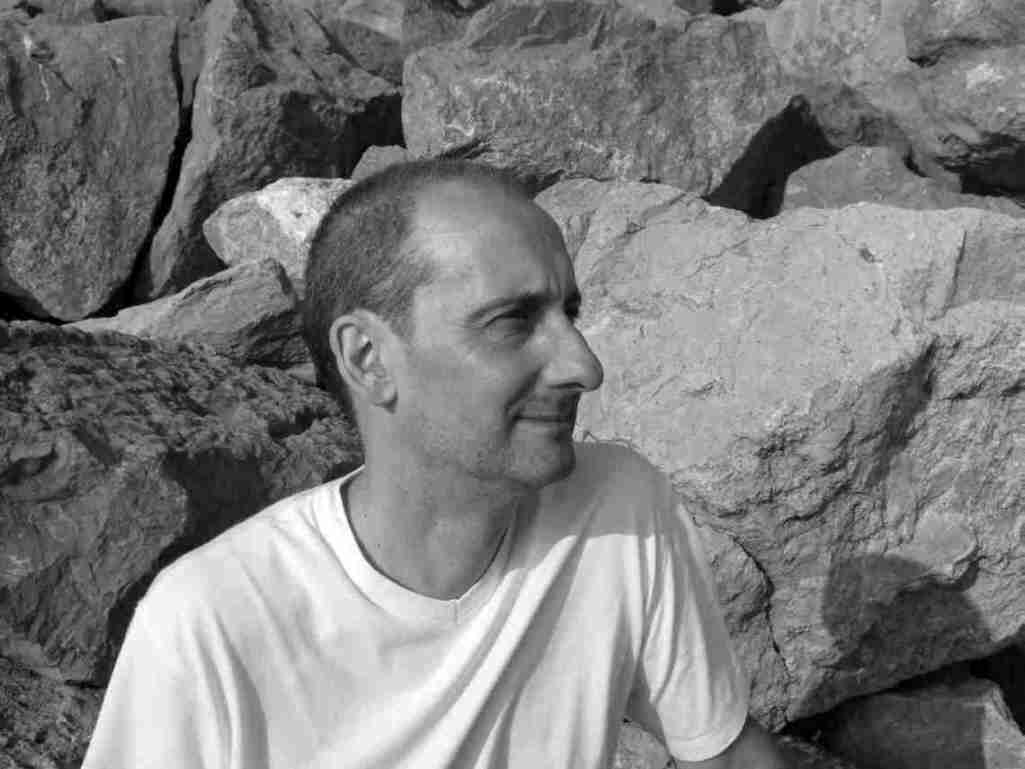
Para conmemorar los 102 años con y 54 sin Malcolm Lowry en la tierra (Chesire, Inglaterra, julio 28 de 1909- Ripe, Inglaterra, junio 27 de 1957) y con el propósito de difundir el conocimiento de la obra y la vida del autor de Bajo el volcán, La Cartonera invita a escritoras y escritores, residentes o no en México, a escribir un ensayo corto para ser publicado por esta editorial artesanal y artística.
The above is a call for essay to commemorate Malc's 102 anniversary:
Free short essay, novel, (not necessarily academic) with a maximum of 15 000 characters, about 7 pages.
The texts must be written in point Palatino Linotype , 12 points, 1.5 spaces, in. doc or. odt (word or openoffice).
Additional testing, the author should submit a short biographical (no more than 5 lines), including your email which will be included in the final volume for reference.
The material should be sent to email lacuernacartonera@gmail.com, no later than September 16 of this year. received response will be sent via the same route. The work to publish selected by a jury of renowned author or author, a member of Malcolm Lowry Foundation and a member of The Cartonera whose names and failure will be released on October 14 this year. His decision is final.
The Cartonera in gratitude for the support of creators will publish the selected works and give them unique and numbered triplicate cartonero volume, the November 2, 2011, in a place that will be released in a timely manner.
The authors at all times retain the rights of the signed text, by way of contract, the authorization for the publication and the reissue Cartonera if that were the case.
Alternatively: " You can not live without love without mezcal " The Cartonera Dany Hurpin, Nayeli Sánchez and Rocat
In 1936 Malcolm Lowry found the inspiration for his literary masterpiece, Under the Volcano, in a sleepy town in central Mexico. He also drank himself to the edge of sanity. Charles Montgomery went looking for his ghost.
EXCERPT: For full story and photos, see Vancouver Magazine, October 2002.
…I pushed through a shuttered doorway into a Lowryan hallucination. El Danubio cantina was filthy and packed with sad-eyed cowboys, greasers in Mike Tyson T-shirts and businessmen nursing Coronas. A wrinkled mariachi wandered the tables with a guitar, his crooning barely audible above the rhythmic yelps of techno-cumbia blasting from the juke box.
A waitress in pink short-shorts winked at me with her one good eye.
I took the only seat left, under the Madonna poster--that's Madonna with the push-up bra, not Madonna and child--beside a man who had apparently just returned from the toilet. He had two fresh palm prints on his T-shirt. The man pulled his shirt down across his belly and introduced himself. Senor Felisiano – translated roughly: Mr. Happy – grabbed the waitress by the thigh and pulled her to the table. Read more
The scene is Mexico, the meeting place, according to some, of mankind itself, pyre of Bierce and springboard of Hart Crane, the age-old arena of racial and political conflicts of every nature, and where a colourful native people of genius have a religion that we can roughly describe as one of death, so that it is a a good place, at least as good as Lancashire or Yorkshire, to set our drama of a man's struggle between powers of darkness and light. The Collected Letters Of Malcolm Lowry
The above is an extract from Lowry's famous letter to Jonathan Cape dated 2 January 1946 defending his novel Under The Volcano which had been criticised by the Cape reader William Plomer.
It is interesting to note the two writers that Lowry chooses to identify with Mexico - Ambrose Bierce and Hart Crane. In this post, I intend to look at Bierce but I will return to Hart Crane in the future.
Ambrose Gwinnett Bierce (June 24, 1842–1914?) was an American editorialist, journalist, short story writer, fabulist and satirist. Today, he is best known for his short story, "An Occurrence at Owl Creek Bridge" and his satirical lexicon, The Devil's Dictionary.
The sardonic view of human nature that informed his work — along with his vehemence as a critic — earned him the nickname "Bitter Bierce". Despite his reputation as a searing critic, however, Bierce was known to encourage younger writers, including poet George Sterling and fiction writer W. C. Morrow. Bierce employed a distinctive style of writing, especially in his stories. This style often includes a cold open, dark imagery, vague references to time, limited descriptions, the theme of war, and impossible events.
In 1913, Bierce traveled to Mexico to gain a firsthand perspective on that country's ongoing revolution. While traveling with rebel troops, the elderly writer disappeared without a trace.Read more on Wikipedia.
There are many different theories as to what happened to Bierce. One of the best sources on the different theories can be found at the Biercephile site.
Lowry's choice of Bierce in the Cape letter appears to fit into Lowry's literary mythology for Mexico as a place of potential dangers where you could perhaps disappear on the whim of a Mexican official. Some commentators believe that Bierce was murdered because he was thought to be spying. Lowry always stated that he was under suspicion as a spy in Mexico and the Consul is murdered by right wing police officers in Under The Volcano.
The last letter that Bierce wrote would have appealed to Lowry and for that matter Crane who disappeared himself in the Gulf of Mexico by stepping off the back of a ship:
"As to me, I leave here tomorrow for an unknown destination." -- The last line of the last letter from Ambrose Bierce, December 26, 1913.
Carlos Fuentes has written a novel based on Bierce's disappearance called Old Gringo (Spanish: Gringo Viejo. Fuentes wrote the novel over a period extending between 1964 and 1984 and finally published in 1985. In 1989 it was made into a film directed by Luis Puenzo called Old Gringo starring Gregory Peck. The novel is inspired by the disappearance of Ambrose Bierce amidst the chaos of the Mexican Revolution, the novel addresses such themes as death, cultural exchange, and Mexican identity. Buy or read more on Wikipedia
Here is a sequence from the movie featuring the unpredictability of life in Mexico in 1913:
There are two further films dealing with the disappearance - From Dusk Till Dawn: The Hangman's Daughter released in 1999 which is set in Mexico in 1913. A group of missionaries, bandits, Mexican revolutionaries, and Ambrose Bierce end up a temple. In the original ending, Bierce ended up as vampire, endlessly walking the Earth after seeking a quick death! The final print ending has Bierce surviving the encounter, wandering off into the Mexican countryside. Here's the trailer:
The other film is a Mexican one called Ah! Silenciosa by Marcos Cline-Marquez. The film is a brief magical-realism piece about a wealthy Mexcican woman opposed to Villa's revolution who tries to save Bierce from execution. The short film interweaves a thread from Bierce's most famous story, "An Occurrence at Owl Creek Bridge" with speculation as to a possible scenario for Bierce's fate.
I am unsure whether Lowry knew that Bierce had visited England as he would have enjoyed the link back to Liverpool and probably would have agreed with Bierce's description of the city. In 1872 Bierce passed through Liverpool on his visit to England. Apparently, he didn't think much of Liverpool - "a wildly uninteresting commercial soil" but he did set the beginning of a short story called A Psychological Shipwreck in the city.
In the summer of 1874 I was in Liverpool, whither I had gone on business for the mercantile house of Bronson & Jarrett, New York. I am William Jarrett; my partner was Zenas Bronson. The firm failed last year, and unable to endure the fall from affluence to poverty he died.
Having finished my business, and feeling the lassitude and exhaustion incident to its dispatch, I felt that a protracted sea voyage would be both agreeable and beneficial, so instead of embarking for my return on one of the many fine passenger steamers I booked for New York on the sailing vessel Morrow, upon which I had shipped a large and valuable invoice of the goods I had bought. The Morrow was an English ship with, of course, but little accommodation for passengers, of whom there were only myself, a young woman and her servant, who was a middle-aged negress. I thought it singular that a traveling English girl should be so attended, but she afterward explained to me that the woman had been left with her family by a man and his wife from South Carolina, both of whom had died on the same day at the house of the young lady's father in Devonshire--a circumstance in itself sufficiently uncommon to remain rather distinctly in my memory, even had it not afterward transpired in conversation with the young lady that the name of the man was William Jarrett, the same as my own. I knew that a branch of my family had settled in South Carolina, but of them and their history I was ignorant.
The Morrow sailed from the mouth of the Mersey on the 15th of June and for several weeks we had fair breezes and unclouded skies. The skipper, an admirable seaman but nothing more, favored us with very little of his society, except at his table; and the young woman, Miss Janette Harford, and I became very well acquainted. We were, in truth, nearly always together, and being of an introspective turn of mind I often endeavored to analyze and define the novel feeling with which she inspired me--a secret, subtle, but powerful attraction which constantly impelled me to seek her; but the attempt was hopeless. I could only be sure that at least it was not love. Having assured myself of this and being certain that she was quite as whole-hearted, I ventured one evening (I remember it was on the 3d of July) as we sat on deck to ask her, laughingly, if she could assist me to resolve my psychological doubt. Read complete story here.
I am back after a longer break from the blog than I envisaged following the Lowry Festival in Liverpool which ended late last year.
Since then, I have continued to read and research around Lowry's work. Recently, I have been looking at the connections between Hart Crane and Lowry. I came across an article by Anthony Wright on the Mexconnect site which lists writers including Lowry and Crane inspired by Mexico which I thought I would share. The article looks at recent novelists such as Roberto Bolaño and David Lale who continue the tradition of writers inspired by Mexico.
Don't forget to drop over to the Malcolm Lowry Foundation blog to read Alberto's posting of the discussions around the above.
Alberto has published some interesting text and lots of photographs of the participants and the art exhibition which is accompanying the programme of events.
Here is a wonderful selection of images of Mexico photographed by Hugo Brehme.
Brehme was a major early twentieth century Mexican photographer, who studied his art in his native Germany. Around the turn of the century he began publishing photographs of both Germany and North Africa. Several years later he traveled through parts of South America, Guatemala and Salvador. He first arrived in Mexico in 1905. As early as 1912, Brehme established a studio in Mexico City.
During the following years, Brehme's photographs of Mexico became known worldwide, particularly his black and white and sepia toned postcards and through the publication of his books. His larger and more valuable photographs were sometimes hand tinted in colors and signed by him in pencil. Below is his hand tinted photograph of the volcano Popocatepetl circa 1920.
Hugo Brehme's famous books include, Mexico Pintoresco (1923), Picturesque Mexico (1925) and Pueblos y Paisajes de Mexico (1932).
I have been re-reading Malc's Dark as the Grave wherein my Friend is Laid and I have been digging out images, video and music to illustrate references in the book.
A theme which runs through the Dark as the Grave wherein my Friend is Laid and La Mordida is Malc's contempt for American tourists who invaded Mexico after the WW2.
However, there is a certain irony in Malc's inferred criticism of US tourism in his work as he and Margerie behaved in many ways like the average tourist in their sight seeing.
There is an obvious tension in any writer visiting a country and using the visit as material for a novel. Malc was accused of adding too much "local colour" to Under The Volcano by one of Cape's readers before publication of the novel. It is interesting to note in the edition of La Mordida which has been published that Lowry's notes from a tourist guide to Mexico are included.
I have posted the above home movie from YouTube which gives a feel for US tourism in Mexico in the late 40's.
El día de Nochebuena de 1944 Malcolm Lowry puso el punto final a Bajo el volcán, casi ocho años después de haberla concebido. Este hecho le causó, según él mismo lo cuenta, “una extraña alegría”. No era para menos; por segunda y última vez en su vida había logrado concluir una narración extensa; pero, sobre todo, había logrado (no sé si él lo sabía, aunque probablemente lo intuía) escribir una de las obras maestras del siglo XX. Ambiciosa, compleja, bella, oscura, trágica, densa, romántica, jocosa, mágica, mística, religiosa, simbólica, realista, alegórica. Todos estos adjetivos, y seguramente algunos otros que se me han escapado, ajustan a la novela, y aún así, Bajo el volcán es algo más. Quizá el adjetivo que mejor cuadre con la obra, porque de alguna forma resume a todos los mencionados, es el de poética. En Bajo el volcán, Lowry logra plenamente con su prosa lo que no pudo conseguir con sus versos: hacer de su experiencia vital un hermoso poema (Francisco Rebolledo). Y ahora, cuarenta años después aquélla Quauhnahuac y aquél tiempo “paradisíaco e infernal” reviven en un filme espléndido, cuya poesía “infernal y paradisíaca” emerge de las imágenes fulgurantes de una ciudad silenciosa y de una naturaleza bronca (Manuel Aguilar de la Torre).
I set this blog up to mark the centenary of Malcolm Lowry's birth in July 2009.
I want to use the blog to publish my on-going research into Lowry's Wirral and to document my psychogeographical wanderings around Wirral and Liverpool in search of Lowry's spirit.
I will also use the blog to document the various themes that run through Lowry's work such as his love of cinema and jazz which I share with him.
Draw up a stool and join Malc and me at the bar in the clubhouse and enjoy the night!
Colin Dilnot
colin.dilnot@gmail.com
The photograph shows the original Caldy Golf Clubhouse, Wirral (not actually the 19th hole because the course was only 9 holes when first developed!) circa 1910.
You can see Caldy in the background which was just being developed by David Benno Rappart.
The clubhouse would have looked like this when Malcolm Lowry as a youth used the course which was near to his home at Inglewood in Caldy.
The clubhouse was located to the west of the Hooton to West Kirby Railway line near a bridge crossing what is now Shore Road. The building still stands and has been converted to residential accommodation though the landscape has changed considerably in a 100 years.
I will be sharing more information and photographs detailing Lowry's Wirral both on the blog.
An essay detailing some of my research is now published in a book called Malcolm Lowry: From the Mersey to the world.
I am currently working on a bigger project entitled 'Gutted Arcades of the Past' detailing Lowry's early life and works.
Malcolm Lowry: From the Mersey to the World Biggs, Bryan & Tookey, Helen (eds)
Malcolm Lowry described Liverpool as ‘that terrible city whose main street is the ocean’. Born on the Wirral side of the river Mersey, Lowry’s relationship to the Merseyside of his youth informs all of his writing and Liverpool itself continued to hold tremendous significance for him, even though he never returned. Published in conjunction with a festival and exhibition at Liverpool’s Bluecoat arts centre celebrating Lowry’s centenary, this beautifully produced book showcases a variety of creative and critical approaches to Lowry and his work, and includes twelve specially commissioned pieces of new writing. There is a particular focus on place and on journeys; contributors write from the UK, Europe, Canada and Mexico, and reflect both on Lowry’s ‘voyage that never ends’ and on their own journeys with and through Lowry’s work. The book also demonstrates the richness of Lowry’s influence on contemporary visual artists and includes full-colour illustrations throughout. It will be an indispensable companion for anyone interested in the creative legacy of Malcolm Lowry’s life and work.


 This DVD was new to me:


 Posts
Posts